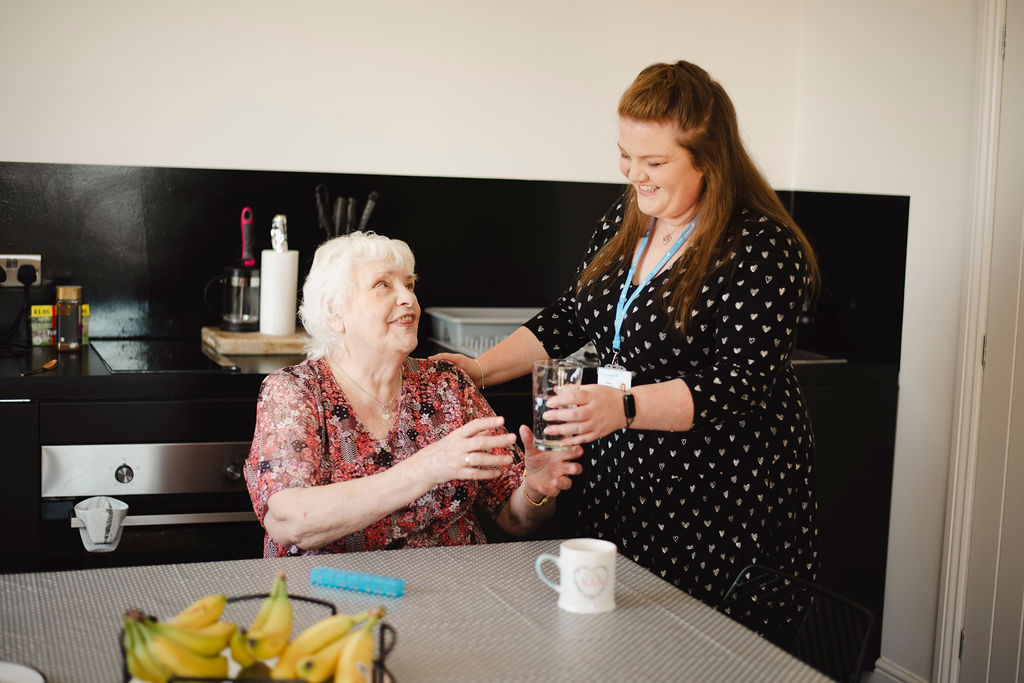


Someone in your family has just had the conversation you’ve been dreading. Maybe your mum had a fall last week. Maybe your dad came home from a hip replacement and is struggling to manage on his own. Or perhaps you’ve been watching the small signs accumulate over months: missed meals, an untidy home, a parent who seems quieter than usual. Now you need to find reliable home health care in Windsor, quickly, and you’re not sure where to begin.
The Windsor and Berkshire care landscape can feel daunting at first. There are multiple providers, unfamiliar terms like “domiciliary care” and “CQC registration,” and very little guidance on how to compare your options or what you should actually be paying. This guide cuts through that noise. By the time you finish reading, you’ll know what types of care are available locally, how to verify a provider’s credibility, what to expect on cost in 2026, and the specific steps to take to get care started. Families across Windsor and the wider Berkshire area already turn to providers like Visiting Angels Berkshire for this kind of support. Before getting into providers, it’s worth being clear about what home care actually involves.
What home care in Windsor actually covers
One of the most common misconceptions is that “home health care” means nursing care in the clinical sense. For most families, what they actually need is something different: skilled, compassionate support that helps a person stay safely in their own home rather than moving into a residential setting.
Personal care and daily living support
Personal care is what most families think of first, and rightly so. It is not medical care, but it is skilled and dignified support that makes an enormous practical difference to someone’s daily life. It typically includes:
- Help with washing, bathing, dressing and grooming
- Toileting and continence management
- Help moving safely around the home and transferring
- Preparing meals and supporting good nutrition and hydration
- Light housework, laundry and keeping the home safe and tidy
- Shopping, errands and collecting prescriptions
Companionship, medication support and post-operative care
Some of the most important types of support are less visible. Structured companionship visits reduce isolation, which Age UK and NHS research identify as a serious and underestimated risk for older people living alone. Medication prompting and monitoring prevents missed doses or dangerous errors, particularly for people managing multiple prescriptions. Post-operative care is increasingly common for people returning home after a hip replacement or similar procedure; in these cases, a domiciliary carer can assist with mobility, personal care and liaison with a GP or district nurse during recovery, while any clinical monitoring of vital signs would typically be carried out by a district nurse or registered nurse rather than a standard domiciliary carer.
Specialist care for complex conditions
For families supporting someone living with dementia, Parkinson’s disease, stroke, cancer or a palliative condition, the requirements go beyond standard personal care. These situations call for a provider whose carers are trained and experienced in complex care, not just an agency that handles general domestic support. This distinction becomes critical when you’re comparing providers.
How to find a reputable home care provider in Windsor
When you start searching for a home care agency, CQC registration is your first filter. The Care Quality Commission is the independent regulator of health and social care in England, and its inspection reports are publicly available at cqc.org.uk. Any provider you consider should appear on that register with a published rating. For further reading on the expected standards, see this guidance on domiciliary care standards and quality assurance.
Checking CQC registration
Several CQC-registered providers operate in the Windsor area, including Trinity Homecare, Bluebird Care (Reading, Maidenhead and Windsor) and Nest Homecare. Because CQC ratings are updated after every inspection cycle, check each provider’s current rating directly at cqc.org.uk rather than relying on any figure quoted elsewhere, including here. The full local register may also include providers not listed in any single guide.
Visiting Angels Berkshire: a locally trusted option
For families seeking home care in Windsor that feels more personal than a large national agency can offer, Visiting Angels Berkshire is worth a direct conversation. The agency is CQC-registered and serves Windsor and the surrounding communities, and you can read feedback from the local families it supports in its Google reviews. It advertises a client-led caregiver matching approach, in which clients are involved in selecting their carer based on personality, shared interests and routine compatibility, an approach worth asking about in detail during an initial assessment.
The agency also states that care plans are flexible without the requirement for long-term contracts, and that a family communication platform is available to keep relatives informed about their loved one’s wellbeing. As with any provider, it is sensible to confirm these specifics in writing before care begins. For families who prioritise continuity and clear communication, these are exactly the right questions to ask.
Questions to ask any provider before you commit
Regardless of which agency you contact, ask these questions before you proceed:
- Is the agency registered with the CQC, and what is its current published rating?
- Will my relative have a consistent, named carer rather than a rota of different faces?
- How does the agency match a client to their carer, and can we meet the carer before care starts?
- What happens if the regular carer is unwell or unavailable?
How an agency responds to these questions on an initial call tells you a great deal about how they will treat your relative once care is under way.
What a CQC rating means for your family
The CQC rates every registered provider across five key questions, judging whether care is:
- Safe — are people protected from abuse and avoidable harm?
- Effective — does care achieve good outcomes and follow best practice?
- Caring — do staff treat people with compassion, dignity and respect?
- Responsive — is care organised around the individual’s needs?
- Well-led — is the service well-managed, open and continually improving?
Each question is rated individually, and the overall service receives one of four ratings:
- Outstanding — performance is genuinely exceptional.
- Good — inspectors found solid evidence across all five areas. This is a credible, reassuring rating.
- Requires Improvement — a signal to probe further before committing.
- Inadequate — the service should not be on your shortlist.
Families in Windsor frequently report the same structural problem: agencies that rotate multiple carers through one client. The complaints are familiar, caregivers who don’t follow the care plan, no-shows, late arrivals, and a family left unable to reach the agency once care has started. These patterns are not simply isolated incidents; they often reflect resourcing and rostering practices embedded in how a particular agency is run. An agency that assigns a named, personality-matched carer and invests in continuity tends to produce fundamentally different outcomes from one that fills slots with whoever is available. When speaking to any local provider, it is worth asking directly about continuity and reading more on the concept of Carer Centricity in practice.
Red flags in reviews and contracts
Watch for agencies that cannot confirm a named carer before care begins, contracts that include no clear escalation or complaints process, and slow or dismissive responses to initial enquiries. A good provider treats the first phone call as seriously as the care itself, because that call is the first indicator of how well they communicate under pressure. You can also read examples of client feedback to see what consistent, well-delivered home care looks like.
Home care costs in Windsor and Berkshire: 2026 figures
Cost is often the question families are most anxious to ask and least sure how to frame. Here are realistic 2026 figures for Berkshire, which apply across Windsor and the surrounding area. Across Berkshire, visiting (hourly) care generally ranges from around £20 to £30 per hour, with a county average near £26. One benchmark matters more than that average, though: the Homecare Association calculates that delivering safe, compliant care costs a minimum of roughly £32 to £34 per hour. Rates noticeably below that should prompt a question about what is being cut, whether that is carer pay, training, visit length or continuity.
What Visiting Angels Berkshire charges
For full transparency, our 2026 pricing is:
- Hourly visits (weekday): £38 per hour
- Weekend visits: £39 per hour
- Minimum visit length: one hour — we do not offer rushed 15- or 30-minute calls
- Live-in care: from £2,000 per week
Our rates sit deliberately above the county average, and above the Homecare Association’s minimum, because properly paid, trained and retained carers are what make consistent, named-carer support possible. Cut-price hourly rates almost always come at the expense of the continuity families value most.
Live-in care: when it makes sense
Live-in care often becomes the more practical option once daily visiting care reaches around five to six hours: beyond that level of need, a single live-in carer is frequently both more cost-effective and more appropriate, particularly for advanced dementia or post-operative supervision. A good provider will talk this through honestly during an initial assessment, rather than pushing you towards a more expensive arrangement than you need.
Funding routes and the council assessment process
Many families assume care must be paid for entirely out of pocket. That’s not always the case, and it’s worth understanding your options before making any financial commitments.
How the Royal Borough of Windsor and Maidenhead assesses care needs
The starting point is a care needs assessment arranged through the council’s Front Door Team on 01628 683744. A social care professional will meet with your relative to understand how they manage everyday tasks and whether they have eligible needs under the national framework. If eligible, the council then conducts a means-tested financial assessment based on income, savings and assets. The threshold is £23,250 in capital for a single person: below that level, the council may fund care fully or in part; above it, the expectation is self-funded care. The value of your relative’s home is excluded from the means test if they are still living there. For details about local arrangements, see the council guidance on paying for care and support.
Direct payments, council-managed budgets and self-funded care
If the council determines that support is needed, there are three ways it can be delivered:
- Direct payment — the family receives cash to arrange and manage care themselves, with full choice over the provider.
- Council-managed budget — the council arranges care on the family’s behalf.
- Mixed approach — a combination of the two.
For self-funders, there is no need to wait for a council assessment at all: many families contact a regulated private provider directly to begin care sooner, particularly after a hospital discharge where speed matters.
How to arrange care: the steps
You now have the framework. Here’s how to turn that knowledge into action.
- Start with a home care assessment: many reputable providers offer a free, in-home assessment to understand your relative’s routines, preferences and specific care needs, check with each agency whether this applies. This is where a proper care plan is built around the individual rather than a generic package. It’s also where you’ll get a clear sense of whether the agency listens well and communicates openly. Visiting Angels Berkshire conducts in-home assessments across Windsor and the surrounding area, and there’s no obligation attached to that first conversation.
- What happens after the assessment: following the assessment, the provider will propose a care plan and a matched carer. A good agency will arrange for the family to meet the carer before care begins, and will agree a schedule with clear terms around contract length and flexibility. As your relative’s needs change, the care plan should flex with them, upward or downward, without pressure to lock in a higher level of support.
- Your next move: the hardest part is usually making the first call. Whether you begin by contacting the council’s Front Door Team on 01628 683744 to request a needs assessment, by visiting cqc.org.uk to check a provider’s current inspection rating, or by reaching out to Visiting Angels Berkshire directly for a conversation about home care in Windsor, the most important thing is to start. The support you need exists locally, and you now know exactly how to find it.
Finding the right home care in Windsor
Reliable home care in Windsor is available, and finding it does not have to be overwhelming. The types of support on offer range from a few hours of companionship or personal care each week through to full live-in care for complex conditions. CQC registration is your baseline credibility check, but caregiver consistency and transparent communication are what separate a good agency from a genuinely great one. If you want a short primer on the benefits, see our ten advantages of home care.
Costs in Berkshire are predictable, funding routes exist whether you are self-funded or eligible for council support, and the assessment process is more straightforward than it first appears. Visiting Angels Berkshire is a locally experienced home care provider serving families across Windsor and the wider Berkshire area, built around the principle that care should fit the person, not the other way around.
Get in touch with a local provider, ask for an assessment, and take the first step towards care that works around your loved one’s life. The right support is closer than you think.

The right support, just when you need it
Speak with a Windsor home care specialist today.
- The very best carers because the right carer changes everything.
- We put our caregivers first, because when they feel valued and supported, they deliver exceptional care.
- Tailored around your needs, giving you the time, dignity and freedom you deserve.