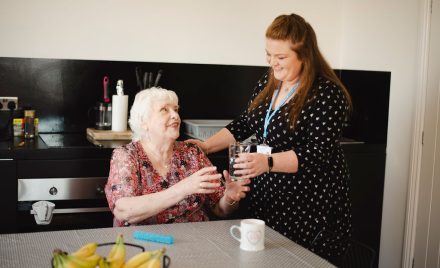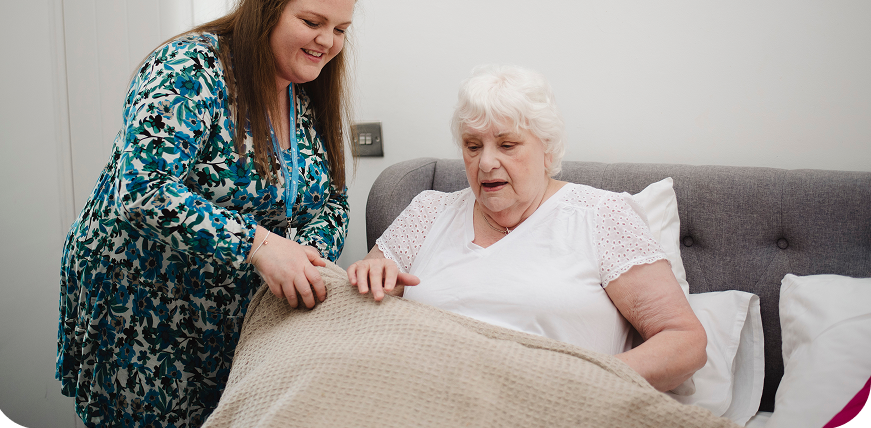


There’s a moment nobody warns you about. The hospital doors slide shut behind you, the car pulls away, and you’re standing in your own hallway for the first time in days. Relieved. Grateful. And quietly terrified. The NHS has done its part brilliantly. Now recovery begins in your living room, your bathroom, your bed. Many patients report being handed a discharge leaflet and left to figure out the rest. This guide is what that leaflet should have been. Whether you’re the one recovering or the person responsible for someone you love, what follows walks you through everything involved in care after a hip operation at home: what to set up before they even arrive, which movement rules genuinely protect the new joint, what to watch for, and when to ask for help. Families across Berkshire, including many supported by Visiting Angels Berkshire, often say the first few days are the hardest. With the right preparation, they don’t have to be.
Getting the Home Ready: Care After a Hip Operation at Home
This is the most time-sensitive action a family can take. Ideally, adaptations are in place before discharge day, not after a stumble on the first morning home. A home audit before the patient arrives, ideally with input from the hospital’s occupational therapist pre-discharge, can prevent weeks of setbacks.
Essential Equipment to Have in Place
Four items make an immediate, measurable difference. A raised toilet seat is non-negotiable: it keeps the hip from bending past 90 degrees during one of the most frequently repeated movements of the day. A shower chair or bath board removes the risk of trying to balance on one leg over wet surfaces. A front-wheel walker provides the primary mobility support for the first weeks, and a long-handled grabber or reacher means nothing needs to be retrieved from the floor by bending forward. In the UK, an NHS occupational therapist can assess equipment needs before discharge; local equipment loan schemes, such as those offered by the British Red Cross or other charity services, are another option for short-term borrowing, and items can also be purchased privately from pharmacies or online.
Adapting the Living Space for Safe Movement
Remove every throw rug in the house. They feel harmless until someone on a walker catches a toe on one. Secure any trailing cables along skirting boards, check that non-slip mats are firmly fixed in the bathroom and kitchen, and confirm that handrails on staircases are solid. Replace any low, soft sofas with a firm chair that has arms and sits at a height where the knees are level with or below the hips. If the bedroom is upstairs, setting up a temporary sleeping arrangement on the ground floor for the first week or two removes the stair risk entirely during the most vulnerable phase of recovery.
Hip Precautions: The Movement Rules That Protect the New Joint
These rules feel restrictive. That’s the point. Following them consistently for six to twelve weeks, as directed by your consultant, is what prevents dislocation, and what makes the difference between a smooth hip replacement recovery at home and a serious setback. Many patients report becoming accustomed to the precautions within a week or two. The discomfort of remembering the rules is considerably less than the consequences of ignoring them.
The 90-Degree Rule and Why Breaking It Is Dangerous
The hip must not bend beyond 90 degrees during the healing period. In practice, this means:
- No low chairs
- No reaching forward to pick up objects from the floor
- No bending to put socks on without a sock aid
- Care needed before sliding into a car back seat
- Knees never higher than the hips when sitting at a table
Using the raised toilet seat, the shower chair, and the grabber throughout the day keeps the joint within its safe range without having to think consciously about every movement.
What to Avoid: Positions, Movements and Activities
Beyond the 90-degree rule, three other movements are off limits:
- Crossing the legs at the knee or ankle
- Twisting the hip or pivoting on the operated leg
- Lying on the side for the first eight weeks — sleep on your back instead
On the stairs, technique matters, always follow the specific guidance from your physiotherapist, as stair instructions can vary depending on your surgery and individual progress. These precautions apply whether standing, sitting or lying: there is no position in which the joint can be treated carelessly during those first weeks.
Wound Care and Managing Medication: Home Care After Hip Surgery
Recovery after a hip operation runs on routine. Consistent wound care and medication timing make a real difference to both comfort and the speed of healing. This is the daily structure that holds everything else together.
Keeping the Wound Clean, Dry and Healing Well
Dressing and clip-removal routines vary between NHS trusts and surgical teams, so the most important step is to follow the specific instructions you receive from your hospital, district nurse or GP practice. As a general guide, waterproof dressings are typically left in place for the first seven to fourteen days, you can shower with them on, but do not soak the wound in a bath, pool or hot tub. Do not apply cream, powder or lotion directly to the incision site. Once clips or stitches have been removed by the district or practice nurse, usually around the two-week mark, the wound can typically be left uncovered and soap and water can run over it normally during showering.
The warning signs of infection are worth knowing clearly. Contact your GP or surgical team the same day if you notice any of the following:
- A temperature above 38 degrees Celsius
- Increasing redness or swelling around the wound
- Discharge that is thick, discoloured or has an unpleasant smell
- Pain that worsens rather than gradually eases
When in doubt, call, don’t wait!
Pain Relief, Blood Thinners and Bowel Management
The medication regime after hip surgery works in three strands:
- Regular paracetamol — the foundation, taken on schedule, not just when pain peaks
- Prescribed anti-inflammatories — work alongside it for the first weeks
- Blood-thinning medication — often aspirin, rivaroxaban or apixaban, typically prescribed for two to six weeks post-discharge to prevent deep vein thrombosis, depending on individual factors and in line with NICE guidance
Always take the specific anticoagulant, dose and duration prescribed to you, and never skip a dose. One side effect that catches families off guard is opioid-induced constipation. Most hospitals prescribe a laxative for exactly this reason, take it as directed. If constipation persists for more than three days despite laxatives, contact your GP rather than waiting to see whether it resolves on its own.
Week-by-Week Movement and Exercise Milestones
Recovery has a trajectory. Knowing what to expect each week removes much of the anxiety that comes from not being able to tell whether things are going well or not. The milestones below reflect standard NHS guidance on home rehabilitation after hip surgery, but always follow the specific advice of your physiotherapist and consultant.
Weeks One and Two: Gentle Movement, Short Walks
The priorities in the first two weeks are reducing swelling, preventing blood clots and keeping the joint mobile without straining it. The key exercises for this phase, all performed on the bed or with chair support, are:
- Ankle pumps
- Glute sets
- Quad sets
- Straight leg raises
- Short heel slides
Frequent short walks, even just to the kitchen and back, roughly once an hour while awake, help reduce DVT risk and keep the hip from stiffening, in line with NHS mobilisation advice. Balance these activity bursts with periods of rest, elevation and an ice pack over the dressing for comfort. Short is exactly right at this stage: aim for quality of movement rather than distance.
Weeks Three to Six: Building Strength and Reducing Aids
Around week three, most people notice a meaningful shift:
- Walking time can increase gradually towards 20 to 30 minutes per session
- Standing exercises, including hip abduction and hip extension with chair support, become more comfortable
- Some patients transition from a walker to a single stick around week four, on the advice of their physiotherapist
The activity milestones families look forward to tend to fall into a broadly predictable sequence, though timings vary depending on individual progress and your surgeon’s guidance:
Warning Signs That Need Urgent Attention
Bookmark this section. Much of the worry families experience in the first weeks comes from not knowing which symptoms are part of normal recovery and which require action. The answer is simpler than most people expect: know the three categories.
Signs of DVT, Infection and Dislocation
- Deep vein thrombosis (DVT) — new calf pain or leg swelling; same-day contact with your GP or surgical team, with immediate escalation if symptoms worsen rapidly
- Pulmonary embolism — sudden shortness of breath, chest pain or collapse; call 999 without delay
- Infection — fever, increasing wound redness, discharge, or pain that worsens rather than improves; report to the GP or surgical team the same day
- Hip dislocation — sudden severe pain often described as a pop, a leg that looks shorter or rotated, and an inability to move the hip at all; this is a 999 emergency
These are distinct situations, and knowing the difference matters.
When Professional Home Care Makes the Difference
Many families try to manage post-operative care entirely on their own. They cook, assist with washing and dressing, manage medication, sit up worrying at 2am, and do it all while holding down jobs and managing their own households. There’s no failure in realising, even a week in, that a loved one’s recovery needs more structured support than a family can realistically provide.
What Post-Operative Home Care Actually Involves
Professional care after a hip operation at home covers the practical tasks that are harder than they look:
- Personal care support whilst observing hip precautions throughout
- Medication prompts and management
- Vital signs monitoring
- Mobility support
- Meal preparation
A carer with post-operative experience knows the movement rules instinctively and applies them during every interaction, from helping someone dress to assisting them to a chair. This isn’t overcautious: it’s the difference between a safe assist and an inadvertent injury from well-meaning but untrained help.
Bridging the Gap Between Hospital Discharge and Independence
This is exactly the gap that Visiting Angels Berkshire is designed to fill. As a CQC-regulated home care provider serving families right across Berkshire — Maidenhead, Windsor, Ascot, Bracknell, Slough, Cookham, Taplow, Bray and everywhere in between — Visiting Angels Berkshire offers tailored post-operative care packages built around the client’s own routine rather than a fixed agency schedule. Carers are trained in post-operative personal care, falls prevention and vital signs monitoring. For families who live at a distance, or who simply need the reassurance that someone qualified is checking in daily, this kind of regulated, flexible care after hip surgery supports recovery from hospital discharge through to regained independence. Care plans adjust as needs change, wherever in Berkshire you call home.
Six Weeks From Now, This Will Be Behind You
Go back to that moment in the hallway. It feels overwhelming because everything is unknown. But the recovery period is finite, and the families who navigate it well share the same approach:
- Prepare the home in advance
- Follow the movement rules without exception
- Stay on top of wound care and medication
- Work through the exercise milestones week by week
- Know precisely which symptoms need action
Some families will manage brilliantly with a bit of structure and this guide alongside them. Others will realise a week in that they need professional support to do it safely. Both are valid. Both are manageable. The goal of care after a hip operation at home isn’t simply to survive six weeks, it’s to arrive on the other side of them stronger, safer and genuinely well.
If you’re anywhere in Berkshire — Maidenhead, Windsor, Ascot, Bracknell, Slough or beyond — and want to talk through what post-operative care at home might look like for your family, Visiting Angels offers no-obligation home visits to build a care plan around the person, not a template. That conversation is always worth having before discharge day, not after.

The right support, just when you need it
Speak with a home care specialist today.
- The very best carers because the right carer changes everything.
- We put our caregivers first, because when they feel valued and supported, they deliver exceptional care.
- Tailored around your needs, giving you the time, dignity and freedom you deserve.