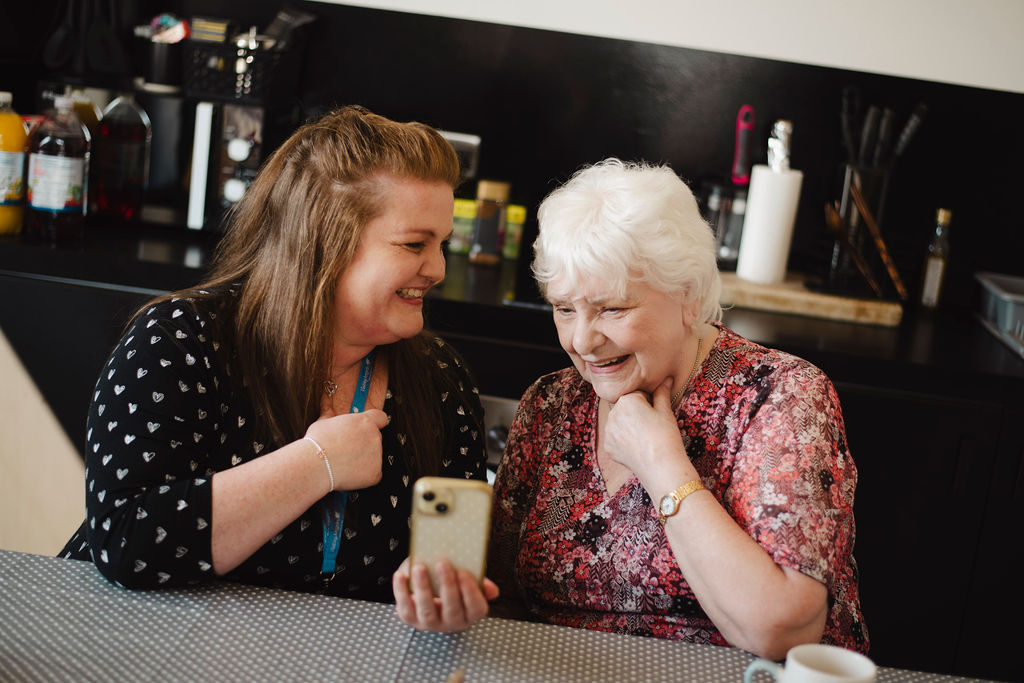

Choosing a home care provider for yourself or someone you love is a big decision.
You’re not simply choosing a company to complete a few household tasks. You’re deciding who may regularly enter your home, spend time with your parent or loved one and support them with some of the most personal parts of everyday life.
Naturally, families want to get that decision right.
But when you begin searching for home care in Lincolnshire, you may find several providers offering similar-looking services. So how do you know which one is right for your family?
The answer isn’t simply to choose the cheapest provider or the one that can start first.
From caregiver continuity and visit lengths to personalised care plans and communication, there are several important things worth considering.
This guide explains what to look for, what questions to ask and how to choose a home care provider with confidence.
Start by Understanding What Help You Actually Need
Before comparing providers, think about what a good week would look like for the person receiving care.
Do they mainly need company?
Are they struggling with washing or dressing?
Would they benefit from someone helping with meals or shopping?
Do they need support getting to appointments?
Perhaps a family caregiver simply needs regular time away from their caring responsibilities.
Home care can cover many different needs, including:
- Companionship
- Personal care
- Meal preparation
- Light household support
- Shopping and errands
- Medication support
- Getting out and about
- Attending appointments
- Respite care
- Dementia care
- Mobility support
- Support following a hospital stay
Understanding the need first makes it much easier to compare providers properly.
1. Check That the Provider Offers Personalised Care
Good home care shouldn’t feel like a standard package.
Two people of the same age can have completely different routines, personalities and care requirements.
One person may enjoy getting up early, having breakfast and going for a walk.
Someone else may prefer a slower morning, listening to the radio before getting dressed and having breakfast later.
These details matter.
When speaking to a home care provider, ask how they create their care plans.
A good provider should want to understand:
- Daily routines
- Personal preferences
- Health and mobility needs
- Hobbies and interests
- Food preferences
- Social activities
- Family involvement
- What the person can do independently
- What they would like help with
- What matters most to them
The care should fit around the individual—not expect the individual to fit around the care company.
2. Ask Whether You Can Choose or Meet Your Caregiver
This is one of the most important questions families can ask.
A caregiver isn’t simply someone completing tasks.
They may spend several hours every week with your parent or loved one.
Personality matters.
Shared interests matter.
Trust matters.
Imagine someone who loves gardening being matched with a caregiver who also enjoys gardening. Or someone who enjoys football, baking, music or local history being supported by a person they can genuinely have a conversation with.
That can completely change how care feels.
At Visiting Angels Lincolnshire, clients have a say in who comes into their home. We take time to understand the person and introduce caregivers we believe will be a good match.
Care should feel like a relationship—not a succession of strangers arriving at the door.
3. Find Out Whether You’ll See Consistent Caregivers
Ask the provider:
“Will Mum see the same caregiver regularly?”
Continuity can make an enormous difference.
They may also become more likely to notice when something seems different.
Perhaps someone isn’t eating as much as usual.
Maybe they’re quieter than normal.
Perhaps their mobility has changed slightly.
A caregiver who knows the person well may recognise these subtle changes more easily than someone meeting them for the first time.
No provider can guarantee the same person for every visit because caregivers have holidays, sickness and other commitments.
But you should ask how continuity is managed and whether the provider actively tries to keep the number of caregivers involved to a minimum.
4. Ask How Long Visits Last
Visit length is another important consideration.
If someone needs help preparing breakfast, getting dressed and taking their time with their morning routine, a very short visit could feel rushed.
Likewise, meaningful companionship can’t always be squeezed into a few minutes.
Ask:
- What is your minimum visit length?
- Will my loved one know how long the caregiver is staying?
- What happens if something takes longer than expected?
- Do caregivers have enough travelling time between clients?
At Visiting Angels Lincolnshire, our minimum visit length is one hour.
We believe this provides time to deliver care properly while also allowing caregivers to talk, listen and build genuine relationships.
5. Look Beyond the Hourly Price
Cost matters.
Every family has a budget, and a reputable home care provider should explain its charges clearly.
But comparing providers solely by hourly price can be misleading.
For example, ask whether the quoted price includes everything you need and whether there are additional charges.
Questions worth asking include:
- What does the hourly rate include?
- Is there a minimum visit?
- Are weekend rates different?
- Are bank holidays charged differently?
- Are there any travel charges?
- Are assessments charged separately?
- Are there administration fees?
- What happens if we need to cancel a visit?
- How much notice is required?
Then compare the overall service rather than just one number.
A slightly different price may represent longer visits, greater continuity, better caregiver matching or a service that better suits your family.
6. Ask How Caregivers Are Recruited and Trained
You’re trusting someone with a person you love.
It’s perfectly reasonable to ask how caregivers are selected.
Find out:
- How caregivers are recruited
- What checks are completed
- What training they receive
- Whether training continues after they start
- How their performance is monitored
- What specialist training is available
- How concerns are handled
If your loved one has specific needs—for example dementia, Parkinson’s, mobility difficulties or another health condition—ask whether the caregiver has appropriate training and experience.
Don’t feel awkward asking detailed questions.
A good provider should welcome them.
7. Pay Attention to How They Talk About Independence
Good care isn’t about doing everything for someone.
It’s about supporting them to continue doing as much as they safely and comfortably can.
For example, rather than automatically preparing someone’s entire meal, a caregiver might encourage them to participate if they enjoy cooking.
Rather than taking over a shopping trip, they might accompany the person so they can continue choosing their own groceries.
The goal should be to preserve:
- Choice
- Confidence
- Routine
- Skills
- Social connections
- Dignity
- Independence
When speaking with providers, listen to the language they use.
Do they talk about what someone can do as well as what they can’t?
That can tell you a lot about their approach to care.
8. Find Out How Families Are Kept Informed
Communication becomes especially important when family members don’t live nearby.
Ask:
- Who will be our main point of contact?
- How will we know how Mum or Dad is getting on?
- What happens if a caregiver notices something concerning?
- Who do we contact outside normal office hours?
- How quickly will someone respond to a concern?
- How are changes recorded?
- How often is the care plan reviewed?
You should know who to contact and feel comfortable raising questions.
Home care should provide reassurance rather than create another source of uncertainty.
9. Ask What Happens When Needs Change
Your parent’s needs today may not be their needs six months from now.
Someone may begin with companionship once or twice a week.
Later, they may benefit from help preparing meals.
Eventually, they might require some personal care or additional visits.
Ask whether the provider can adapt as circumstances change.
This can prevent the family from having to find an entirely new provider every time someone’s needs evolve.
10. Consider Local Knowledge
Lincolnshire covers a large geographical area, including towns, villages and rural communities.
Local knowledge matters.
A locally based care team is more likely to understand travelling times, local communities and the practical realities of providing reliable care across the area.
When comparing providers, ask whether they already have caregivers operating near your loved one’s home.
11. Look at Reviews—but Read Them Properly
Reviews can be helpful, but don’t simply look at the star rating.
Read what families actually say.
Look for repeated comments about:
- Reliability
- Kindness
- Communication
- Continuity
- Caregiver relationships
- Punctuality
- Responsiveness
- Respect
- Quality of care
Patterns are more useful than one unusually positive or negative review.
Also consider how a provider responds to feedback. Their response can tell you something about how they communicate when things don’t go perfectly.
12. Trust How the Initial Conversation Feels
Your first interaction with a care provider matters.
Ask yourself:
Did they listen?
Did they ask about my parent as a person?
Did they seem interested in understanding what we actually need?
Did I feel rushed?
Were my questions answered clearly?
A good initial conversation shouldn’t feel like a sales call.
It should feel like someone is trying to understand your situation.
13. Don’t Be Afraid to Speak to More Than One Provider
You don’t have to choose the first home care company you contact.
Speaking with two or three providers can help you understand what’s available and identify the differences between them.
Use the same questions each time.
That makes comparing services much easier.
You could even write down the answers under headings such as:
- Visit length
- Caregiver continuity
- Caregiver choice
- Cost
- Availability
- Communication
- Training
- Flexibility
- Local coverage
The provider that’s right for one family may not necessarily be right for another.
The goal is to find the best fit for your loved one.
14. Involve Your Parent in the Decision
If the care is for your parent, involve them wherever possible.
After all, they’re the person who will be receiving the support.
Ask what matters to them.
Perhaps they’re worried about having someone unfamiliar in the house.
Maybe they’re concerned that accepting care means losing independence.
Or perhaps they have strong preferences about when visits happen or what they’d like help with.
Giving someone choices can make the transition into home care feel far more comfortable.
Instead of:
“We’ve arranged someone to come and look after you.”
The conversation becomes:
“Let’s find someone you’re comfortable having around who can make a few things easier.”
That’s a very different experience.
15. Ask What Happens Before Care Starts
Once you’ve found a provider you like, ask what happens next.
At Visiting Angels Lincolnshire, the process begins with a conversation about your circumstances and care needs.
This can then be followed by a free care assessment to understand the individual properly.
From there, a personalised care plan can be developed and an appropriate caregiver selected before the care package begins.
A good assessment shouldn’t focus solely on what someone struggles with.
It should also establish:
- What they enjoy
- Their normal routine
- Their preferences
- Their goals
- What they want to continue doing independently
- What would make everyday life better
A Quick Checklist for Choosing a Home Care Provider
Before making your decision, ask:
Care
- Is the care personalised?
- Can the service change as needs change?
- Are visits long enough?
Caregivers
- Can we meet or choose the caregiver?
- Will we see consistent caregivers?
- How are caregivers recruited and trained?
Communication
- Who is our main contact?
- How will family be kept informed?
- What happens if we have a concern?
Cost
- Is pricing transparent?
- What exactly is included?
- Are there additional charges?
Independence
- Will the caregiver encourage my loved one to remain independent?
- Will their routines and choices be respected?
Local support
- Does the provider already operate in our area?
- How quickly can support be arranged?
If a provider is reluctant to answer these questions, that’s useful information in itself.
Why Families Choose Visiting Angels Lincolnshire
At Visiting Angels Lincolnshire, we believe the caregiver relationship is at the heart of excellent home care.
Our approach is built around getting to know the person first.
We offer:
- Minimum one-hour visits
- Personalised care plans
- A free care assessment
- Caregiver choice and careful matching
- Consistent caregivers wherever possible
- Flexible support as needs change
- Companionship and home care
- Personal care
- Specialist and complex care services
- Local support from our Lincolnshire team
Most importantly, we believe people receiving care should have a voice in who supports them and how their care is delivered.
Frequently Asked Questions
How do I choose a good home care provider?
Look beyond price and availability. Consider caregiver continuity, visit length, training, personalised care plans, communication, reviews and how much choice the person receiving care is given.
What questions should I ask a home care provider?
Ask about minimum visit lengths, caregiver consistency, training, pricing, additional charges, care assessments, communication, emergency procedures and what happens if care needs change.
Can I choose who provides my care?
This depends on the provider. At Visiting Angels Lincolnshire, clients have a say in who comes into their home, and caregiver matching is an important part of our approach.
How long should home care visits be?
The appropriate visit length depends on the individual’s needs. However, visits should provide enough time for care to be delivered safely and without making the person feel rushed. Visiting Angels Lincolnshire provides minimum one-hour visits.
What happens during a home care assessment?
A home care assessment is an opportunity to understand the person’s needs, routines, preferences and goals. This information can then be used to develop an appropriate personalised care plan.
Can home care change if my parent’s needs increase?
Yes. Care needs can change over time, so it’s important to choose a provider that can review the care plan and adapt the level or type of support when appropriate.
Finding Home Care That Feels Right
Choosing a home care provider isn’t simply about finding someone who can turn up at the required time.
You’re choosing who will spend time with someone you love.
Look for a provider that listens, communicates clearly and sees your parent as an individual rather than another appointment on a schedule.
Ask questions.
Meet the people involved.
Include your parent in the decision.
And don’t be afraid to take your time until you’ve found a service that feels right.
If you’re comparing home care providers in Lincolnshire, Visiting Angels Lincolnshire would be happy to answer your questions and explain how our approach works.
Contact our local team for a friendly conversation or arrange a free care assessment to explore what the right support could look like for you or your loved one.