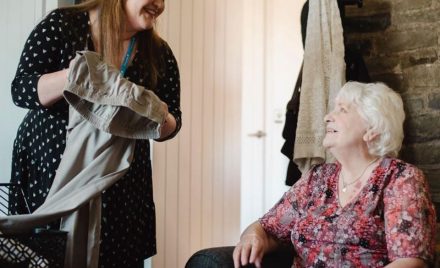
When an older person begins finding everyday tasks more difficult, families may start exploring different types of support at home. During this process, two terms often come up: domiciliary care and home help.
Although they are sometimes used interchangeably, they do not always mean the same thing. Understanding the difference can help families identify the type of assistance their relative needs and make more informed decisions about care.
In Northern Ireland, domiciliary care generally refers to support provided to people in their own homes, including help with personal care and daily living. Home help is commonly associated with practical household assistance, although the exact services offered can vary between providers.
Knowing what each service can include makes it easier to understand the available home care services in Northern Ireland and decide what may be appropriate for an older family member.
1. What Is Domiciliary Care?
Domiciliary care is support provided to someone in their own home to help them manage everyday life and maintain their independence.
In Northern Ireland, the Department of Health describes domiciliary care as a range of services that may include personal care, household tasks and other domestic assistance needed to maintain health, hygiene, dignity and safety.
Department of Health+1
Depending on an individual’s needs and the care arrangement, domiciliary care may include:
- Assistance with bathing, washing and dressing
- Help with using the toilet and maintaining personal hygiene
- Support with mobility and everyday activities
- Assistance with preparing meals
- Help with shopping and household routines
- Companionship and agreed social support
The purpose is to help people who may find certain activities difficult continue living in familiar surroundings with appropriate assistance.
Domiciliary care can be arranged for different lengths of time, depending on the person’s requirements. Some people need short visits during the day, while others may require more frequent or extended support.
2. What Is Home Help?
Home help generally refers to practical assistance with household tasks that an older person may struggle to manage independently.
For example, someone may be able to wash, dress and move around their home without assistance but find cleaning, shopping or preparing meals increasingly difficult.
Home help can provide support with tasks such as:
- Light household cleaning
- Washing dishes and laundry
- Grocery shopping
- Preparing meals
- Keeping frequently used areas tidy
- Other agreed domestic activities
According to Northern Ireland’s nidirect guidance, home help assistants can help with cleaning, shopping and meal preparation. This type of support can make everyday household responsibilities easier for older adults.
nidirect
Home help is particularly useful when someone needs practical assistance but does not necessarily require personal care.
However, the exact tasks available will depend on the provider and the agreed service.
3. What Is the Main Difference Between Domiciliary Care and Home Help?
The main difference is the type of assistance provided.
Domiciliary care can include personal care alongside practical household support, whereas home help is generally focused on domestic activities.
For example, an older person who needs assistance with bathing, dressing and using the bathroom may require domiciliary care. Someone who can manage personal care independently but needs help with shopping and cleaning may benefit from home help.
Here is a simple comparison:
| Area | Domiciliary Care | Home Help |
| Main purpose | Personal care and support with daily living | Practical household assistance |
| Personal hygiene | Can include bathing, washing and dressing | Generally not included |
| Meal preparation | May be included | May be included |
| Cleaning | May be included | Commonly included |
| Shopping | May be included | Commonly included |
| Mobility assistance | May be included | Depends on the agreed service |
| Individual care plan | Usually part of a regulated care arrangement | Depends on the provider and service |
It is important to understand that these services can overlap. The Department of Health’s definition of domiciliary care includes certain household tasks, while home help may be provided as part of a wider home care arrangement.
Department of Health+2
4. Who May Benefit From Domiciliary Care?
Domiciliary care may be suitable for older adults who need assistance with personal care or everyday activities but would prefer to remain in their own homes.
It can also support people living with disabilities, long-term conditions or reduced mobility.
For example, an older person may need help getting dressed in the morning, maintaining personal hygiene or moving safely around the house.
Domiciliary care can also be helpful when someone returns home after an illness or hospital stay and needs additional support while rebuilding their confidence and independence.
The type and frequency of care should reflect the person’s individual circumstances.
Families should consider whether their relative needs occasional assistance, several visits throughout the day or more extensive support.
5. When Is Home Help a Suitable Option?
Home help may be appropriate when an older person remains relatively independent but struggles with certain household responsibilities.
As people get older, tasks that once felt simple can become tiring or physically challenging. Cleaning, carrying shopping bags and preparing meals may require more effort than before.
For example, someone who can manage their personal hygiene and daily routine may still appreciate help with:
- Keeping the kitchen and living areas clean
- Washing and changing bed linen
- Collecting groceries
- Preparing everyday meals
- Managing light household chores
This assistance can make the home environment easier to manage without taking away the person’s independence.
Families should discuss the specific tasks required with the provider to understand what is included in the home help service.
6. Can an Older Person Receive Both Domiciliary Care and Home Help?
Yes. An older person may need a combination of personal care and practical household assistance.
For example, someone may require help with bathing and dressing in the morning, along with assistance preparing meals and keeping frequently used areas of the home tidy.
Another person may only need occasional household support initially but require additional personal care as their circumstances change.
Combining different types of assistance can help create a more complete care arrangement.
The important thing is to identify which activities the individual can manage independently and where additional support would be useful.
Families should also make sure that the provider clearly explains which tasks are included in the agreed care arrangement.
7. How Are Domiciliary Care Services Arranged in Northern Ireland?
Families in Northern Ireland can explore support through their local Health and Social Care Trust or an independent home care provider.
If an older person may need support arranged through Health and Social Care services, contacting the relevant Trust can help establish whether an assessment is appropriate.
Families can discuss the person’s daily challenges, health requirements and the type of assistance they may need.
An assessment can help identify suitable support and inform decisions about a care plan.
For those considering an independent provider, it is important to check the services offered, registration requirements, staff arrangements and costs.
In Northern Ireland, domiciliary care agencies providing regulated personal care services must be registered with the Regulation and Quality Improvement Authority (RQIA).
GOV.UK+1
8. What Should Families Consider Before Choosing a Home Care Service?
Before arranging care, families should take time to understand their relative’s individual needs and preferences.
A service that works well for one person may not be suitable for another.
Consider the following factors:
- Type of assistance: Does your relative need personal care, household help or both?
- Frequency of support: Would occasional visits be sufficient, or is regular assistance required?
- Personal preferences: Does the arrangement respect their routines, privacy and independence?
- Caregiver experience: Are the staff appropriately trained for the tasks they will perform?
- Flexibility: Can the service adapt if care requirements change?
- Communication: How will the provider share updates and address concerns?
- Costs: Are the charges and payment arrangements clearly explained?
It is also important to involve the older person in the decision wherever possible. Understanding their wishes can help make the transition to receiving support more comfortable.
9. How Visiting Angels Supports Older Adults at Home
Finding the right type of support can help older adults continue enjoying familiar routines while receiving assistance with everyday activities.
Visiting Angels provides home care services in Northern Ireland, helping individuals receive support in the comfort of their own homes.
Care arrangements can be discussed around an individual’s circumstances, preferences and daily requirements.
Depending on the agreed support, services may include:
- Assistance with personal care and everyday routines
- Help with meal preparation
- Support with household activities
- Companionship and social interaction
- Assistance with maintaining independence
For families looking for a home care service in Belfast, discussing their relative’s requirements with a care provider can help clarify what type of support may be appropriate.
Whether someone needs assistance with personal care, practical daily activities or a combination of both, understanding their needs is an important first step.
Final Thoughts
Domiciliary care and home help both provide valuable assistance to older adults who want to continue living in their own homes. However, they are not always used to describe the same type of support.
Domiciliary care can include personal care and assistance with everyday living, while home help generally focuses on household tasks such as cleaning, shopping and meal preparation.
In Northern Ireland, these services can overlap, so families should always check what a particular provider includes in its care arrangements.
By understanding the differences and considering an older person’s individual needs, families can make more informed decisions about suitable home care services and help their loved ones maintain comfort, dignity and independence.