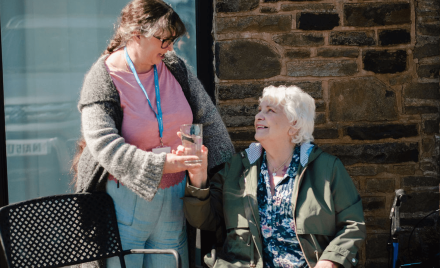
There is something very sneaky about isolation.
It rarely arrives with a dramatic announcement. There is no little man in a suit knocking on the door saying ‘Good morning. I’m here to gradually make your world smaller’
Instead, it starts innocently.
You’re tired, so you don’t go out.
You’re busy so you put off seeing someone.
You don’t feel like talking, so you ignore the phone.
It’s raining, so you stay home.
Then you think, I’ll do it tomorrow.
And before you know it, tomorrow has become next week, next week has become next month, and suddenly your social life consists of the postman, the television and a surprisingly intimate knowledge of daytime television presenters.
The problem is that isolation can become self-reinforcing.
The less we see people, the less confident we can feel about seeing people. The less we do, the harder it can feel to start doing things again. We become comfortable with the familiar, even when the familiar isn’t particularly good for us.
And this matters as we get older.
Staying connected isn’t just about having someone to chat over a cup of tea. Human beings are social creatures. Conversation, laughter, routine, stimulation and feeling useful all play a part in keeping us engaged with the world around us.
When those things disappear, we can lose more than company.
We can lose motivation, become less active.
We can stop taking an interest in what’s happening outside of our front door.
We might eat less well, sleep differently or simply spend more time sitting in the same chair, wondering what happened to everyone.
And the irony is that the longer this goes on, the harder it can feel to do anything about it.
The Confidence Trap
Imagine someone who used to pop into the shops, meet friends for coffee, attend a local group or simply enjoy a walk.
Then perhaps their mobility changes.
Maybe they have a health scare.
Perhaps their partner dies.
They stop driving.
Their family lives further away.
They become nervous about going out alone.
So they stay home.
Initially, it feels like a sensible solution. But gradually, the world outside starts to feel unfamiliar.
The first outing becomes a big deal; the second one takes planning. Eventually something that used to be completely ordinary can feel like an expedition requiring military logistics.
And that’s where small amounts of support can make a surprisingly big difference.
Because sometimes people don’t need someone to completely take over their lives.
They need someone to help them get back into themselves.
Connection Doesn’t Have To Be Complicated
Keeping someone socially connected doesn’t necessarily mean organising a packed calendar.
It can be a cup of tea and a chat.
A walk around the garden.
A trip to the shops.
Going to a community group.
Helping someone get to an appointment.
Looking through old photographs.
Doing a crossword.
Cooking lunch together.
Or simply having someone there who genuinely wants to know how their day has been.
And yes, sometimes that means hearing the same story you’ve heard before.
Possibly several times.
But that’s ok, what I wouldn’t give to hear one of my Nan’s war stories again.
The important thing is that the person telling the story feels heard and seen.
Why Routine Matters
There is also something powerful about having a reason to get up and get going.
When someone knows that another person is coming to visit, they have something to look forward to.
They might get dressed, have breakfast, put the kettle on.
Think about what they want to talk about. It creates a little structure in the day. And those small things matter.
A good care relationship isn’t simply about completing tasks. It’s about maintaining independence, confidence and connection for as long as possible.
It’s about helping them continue to be themselves.
This is where Visiting Angels come in.
At Visiting Angels, care is about the person, not simply the list that needs doing.
Our home care service can provide practical support, companionship and a friendly face when someone needs a little extra help to remain independent around the home.
And sometimes the biggest benefit isn’t the task itself, its everything that happens around it. The conversation. The laughter. The encouragement. The confidence that comes from knowing that someone is there.
The feeling that you are still connected to the world.
Because independence doesn’t necessarily mean doing absolutely everything by yourself. Sometimes independence means having the right support so you can continue doing the things that matter to you.
Maybe that’s staying in your own home, going out for a coffee, keeping up with hobbies or seeing friends.
Maybe it’s simply having someone around who notices when you’ve had a bad day and makes another cup of tea without being asked.
And perhaps that’s the real point.
We shouldn’t wait until someone’s world has become very small before we start helping them make it bigger again.
A little companionship today can prevent a lot of isolation tomorrow. A little encouragement can restore confidence and a little routine can bring purpose back into the day.
And sometimes, one friendly face through the front door can make an enormous difference.
And if that involve a cup of tea, a chat, a walk, a laugh and occasionally hearing the same story for the fourth time, well that’s really not a bad day’s work.
It’s care with a human face.
And that’s exactly what Visiting Angels is all about.