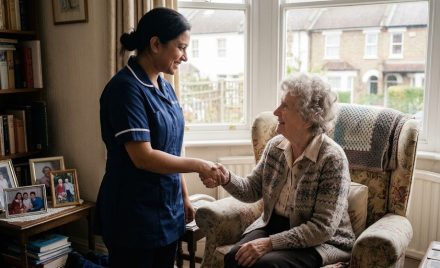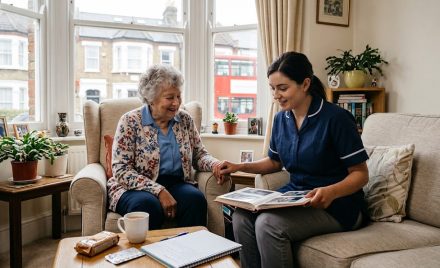

Personal care is the most intimate part of home care. Washing, dressing, toileting and grooming are private, everyday tasks most of us do without a second thought until we need help with them. At Visiting Angels North London, we believe how that help is given matters just as much as the help itself. Dignity isn’t an add-on to home care; it’s the foundation of it.
As a CQC-regulated home care provider serving Camden, Islington, Finchley, Highgate, Hampstead and the surrounding areas, we support local families with everything from hourly personal care visits to live-in care, overnight care and palliative care. This article looks at what dignified, person-centred care actually involves: the training our carers receive, how we protect privacy and choice in practice, and the CQC regulations that hold home care providers like us to account.
What Counts as Personal Care?
Personal care covers the everyday intimate tasks that support a person’s physical wellbeing and appearance: bathing and showering, dressing, oral hygiene, continence and toileting support, skin care and help with mobility during these routines. For many North London families, needing support with these tasks is a difficult adjustment, both for the person receiving care and for the relatives watching a parent or partner lose some independence. A good home care provider recognises that emotional weight and builds their entire approach around easing it, not just completing the task.
Person-Centred Personal Care: What It Looks Like in Practice
“Person-centred care” gets used a lot in the care sector, but it has a precise meaning: care that is built around the individual, not the task list. In practice, that means:
- Getting to know the person before deciding how care is delivered: their routines, preferences, history and what independence means to them specifically. A morning wash routine should follow how someone has always done it, not a standard checklist.
- Offering real choices, not just informing people of what’s about to happen. That includes when they’d like to get up, what they’d like to wear, whether they want a bath or a shower and who supports them.
- Matching carers to clients based on personality and compatibility, not just availability, and keeping that same carer consistent wherever possible so trust can build over time.
- Involving family members and the person themselves in reviewing and updating the care plan, rather than treating it as a fixed document set once and never revisited.
This is the difference between care that is done to someone and care that is done with them.
Dignity in Practice: How We Deliver Personal Care
Dignity in personal care isn’t a single action. It’s a set of habits carried through every visit.
- Privacy first. Doors and curtains closed, appropriate covering used throughout washing and dressing, and only the person’s chosen level of assistance provided, not more.
- Communication that respects the person. Explaining what’s happening and why, asking rather than assuming, and speaking to the person directly rather than over them, even when family members are present.
- Consistency and familiarity. The same trained carer visiting where possible, so personal care is never delivered by a stranger unless absolutely necessary.
- Promoting independence, not replacing it. Encouraging someone to do what they can for themselves, and stepping in only where needed, rather than taking over for speed or convenience.
- Respect for identity. Supporting people to maintain their appearance and grooming habits in a way that reflects who they are, not a generic standard of “presentable.”
None of this happens by accident. It’s the direct result of how carers are trained and how care is supervised.
The Training Behind Dignified Care
Delivering personal care well is a skill, and it’s treated as one. In the UK, all new care workers complete the Care Certificate, a nationally recognised set of 15 standards covering areas including working in a person-centred way, privacy and dignity, communication, duty of care, safeguarding, equality and diversity, and infection prevention and control. It’s the baseline every Visiting Angels North London carer is expected to meet before working unsupervised.
Beyond that foundation, ongoing training is what keeps dignified care consistent rather than occasional. This typically includes:
- Practical instruction in moving and handling, so personal care tasks like transfers and repositioning are carried out safely and comfortably.
- Dementia awareness and communication training, since a large proportion of people receiving personal care are living with dementia and need adapted approaches to consent, reassurance and routine.
- Safeguarding training, so carers recognise and know how to report signs of abuse, neglect or deterioration.
- Specialist training where needed, including continence care, catheter care, end of life and palliative care, and supporting people with sensory impairments.
- Regular refreshers, spot checks and supervision, so standards are maintained long after initial induction rather than assumed.
Training is also where dignity is made explicit rather than left to individual judgement. Carers are taught not just what to do during personal care, but how to do it in a way that preserves a person’s privacy, autonomy and sense of self.
CQC Regulation: The Standards Personal Care Must Meet
Personal care delivered in a person’s own home is a regulated activity in England, and providers offering it must be registered with the Care Quality Commission (CQC). Visiting Angels North London is registered with and regulated by the CQC. Two of its Fundamental Standards are directly relevant to how we work:
Regulation 9, Person-Centred Care, requires that care and treatment is tailored to the individual and reflects their needs and preferences: physical, mental, emotional and social, including those relating to protected characteristics under the Equality Act 2010. Care plans must be developed with the person (and, where appropriate, people close to them) and kept under regular review.
Regulation 10, Dignity and Respect, requires that people are treated with dignity and respect at all times, including privacy when they need or want it, support to remain as independent as possible and involvement in decisions about their own care.
CQC assesses providers against these standards through its single assessment framework, and specifically under the “Caring” quality statement, which looks at whether care is delivered with kindness, compassion and respect for dignity in everyday practice, not just on paper. Providers found to fall short can face regulatory action, from requirement notices through to restrictions on operating.
For families in North London, CQC registration offers a way to check that a provider isn’t just claiming to deliver dignified, person-centred care, but is independently assessed against a legal standard for it.
Home Care Across Camden, Islington, Finchley, Highgate and Hampstead
Visiting Angels North London provides home care across a wide range of local areas, and our carers know the neighbourhoods they work in. Our home care in Camden and home care in Islington teams support clients in some of the most densely populated parts of North London, where quick, reliable local carer matching makes a real difference. In Finchley and Highgate, we work with families who often want a familiar, consistent carer for a parent living alone nearby. Our home care in Hampstead service supports clients who want to remain in their own home and community, with care built around their existing routines and social connections.
Across all of these areas, and North London more widely, the same standard applies: trained, carefully matched carers delivering personal care, live-in care, overnight care and palliative care with dignity and respect, every visit.
Live-In Care, Overnight Care and Palliative Care in North London
Dignity matters just as much beyond a short daily visit. For families across Camden, Islington and the wider North London area who need more continuous support, Visiting Angels North London also provides live-in care, overnight care and palliative care, each built on the same person-centred approach as our personal care visits.
Live-In Care North London
A live-in carer moves into the person’s home, providing round-the-clock support while allowing them to remain in familiar surroundings rather than moving into residential care. Live-in care in North London suits people with more complex needs, couples who want to stay together, or anyone who values the reassurance of having a dedicated carer close by at all times. As with our personal care visits, we carefully match each live-in carer to the client’s personality, routines and preferences, and keep that relationship consistent.
Overnight Care in Camden and Beyond
Overnight care provides support through the night for people who are at risk of falls, need help with repositioning or continence, or simply feel safer knowing someone is there. We provide overnight care in Camden and across North London, either as waking night care, where the carer stays awake throughout, or sleeping night care, where they’re on hand if needed. Overnight visits follow the same principles of privacy and dignity as daytime personal care: minimal disruption, a calm approach and respect for the person’s usual sleep routine.
Palliative Care North London
Palliative care is where dignity matters most. Our carers support people and their families through advanced illness and end of life, working alongside district nurses, hospice teams and GPs to manage comfort, symptoms and personal care needs sensitively. Palliative care at home means someone can remain surrounded by family, familiar belongings and routine, with carers trained to provide practical support and emotional reassurance for the whole family, not just the person receiving care.
Why This Matters When Choosing a Care Provider
When you’re arranging home care for yourself or a family member in North London, it’s worth asking any provider directly: How are your carers trained, and how often? How do you match carers to clients? How do you handle privacy and consent during personal care? And what does your CQC registration cover?
The answers should tell you whether dignity is built into how a provider operates, or whether it’s just a word on their website. At Visiting Angels North London, our carers are trained, matched thoughtfully to each client, and supported by care plans built around the person, because personal care done well should never feel like a task being completed to someone. It should feel like support, given with respect, by someone they know and trust.
If you’d like to talk through personal care, live-in care, overnight care or palliative care options for yourself or a loved one in Camden, Islington, Finchley, Highgate, Hampstead or elsewhere in North London, get in touch with Visiting Angels North London for a home visit and a personalised care plan.