
Why do older people fall out of bed?
Quick summary
Usually one of four things: getting up for the toilet at night, a new medicine causing drowsiness or a blood pressure drop, disturbed sleep and disorientation from dementia, or a bed that is the wrong height. Bed rails are the instinctive fix and often the wrong one, because they carry a serious entrapment risk.
Did they fall out, or fall getting up?
This is the first question, and families often have not separated the two.
Rolling out of bed while asleep is uncommon in adults and points at something specific: vivid dreams and acting them out, a seizure, or profound disorientation. Falling while getting out of bed is far more common, and it is a different problem with different causes.
Ask where they were found, which direction they were facing, and whether the covers came with them. It sounds forensic and it genuinely narrows things down.
1. The night-time trip to the toilet
The single most common answer, and it stacks several risks on top of each other at once.
Getting up quickly from lying flat drops blood pressure. The room is dark. They are half asleep. Any sedating medicine taken at bedtime is at its peak. And they are usually hurrying.
The practical fixes are dull and they work. Sit on the edge of the bed for a slow count of twenty before standing. Put a light on rather than feeling the way, ideally a plug-in sensor light on the route rather than a switch by the door. Move anything that has to be walked around. And take the fluid question to a GP, because needing the toilet several times a night is a symptom worth investigating, and some of the causes, including a urinary infection or a diuretic taken too late in the day, are straightforward to address.
2. Medicines
Falls that start within weeks of a new prescription belong back at the surgery.
Taking four or more medicines is associated with an 18 per cent increase in fall rates in people over 60, and medicines acting on the brain, meaning sleeping tablets, anxiety medicines, antidepressants and antipsychotics, add risk of their own (Izza and colleagues, European Geriatric Medicine, 2020). NICE lists psychotropic and antiarrhythmic medicines alongside polypharmacy among the factors that raise falls risk, and recommends a medication review as part of falls management (NICE NG249, April 2025).
Two timing questions are worth raising specifically. Whether a water tablet could be taken earlier in the day, and whether anything sedating is being taken at bedtime. Both are common and sometimes changeable, and both are decisions for a GP or pharmacist rather than for a family.
3. Dementia and disturbed sleep
Dementia appears on both the NHS and NICE lists of causes of falls, and at night it does something particular.
Sleep becomes fragmented, and waking in the dark in a room that does not immediately make sense produces a strong impulse to get up and go somewhere. Someone may be trying to get to a bathroom that was in a different place in a previous house, or to leave for work fifty years after retiring. The fall happens because their plan is dangerous, not because anything else has failed.
What helps here is orientation rather than restriction. A low light left on, a clock that shows whether it is day or night, a clear and uncluttered route, and the bathroom door left open with a light inside. A bed lowered closer to the floor reduces the height of any fall.
Sudden confusion that has come on over hours or days is a different matter and needs a GP the same day, because that is usually delirium from an infection or a medicine rather than a progression of dementia.
4. The bed itself
Beds are rarely the right height, and nobody thinks to check.
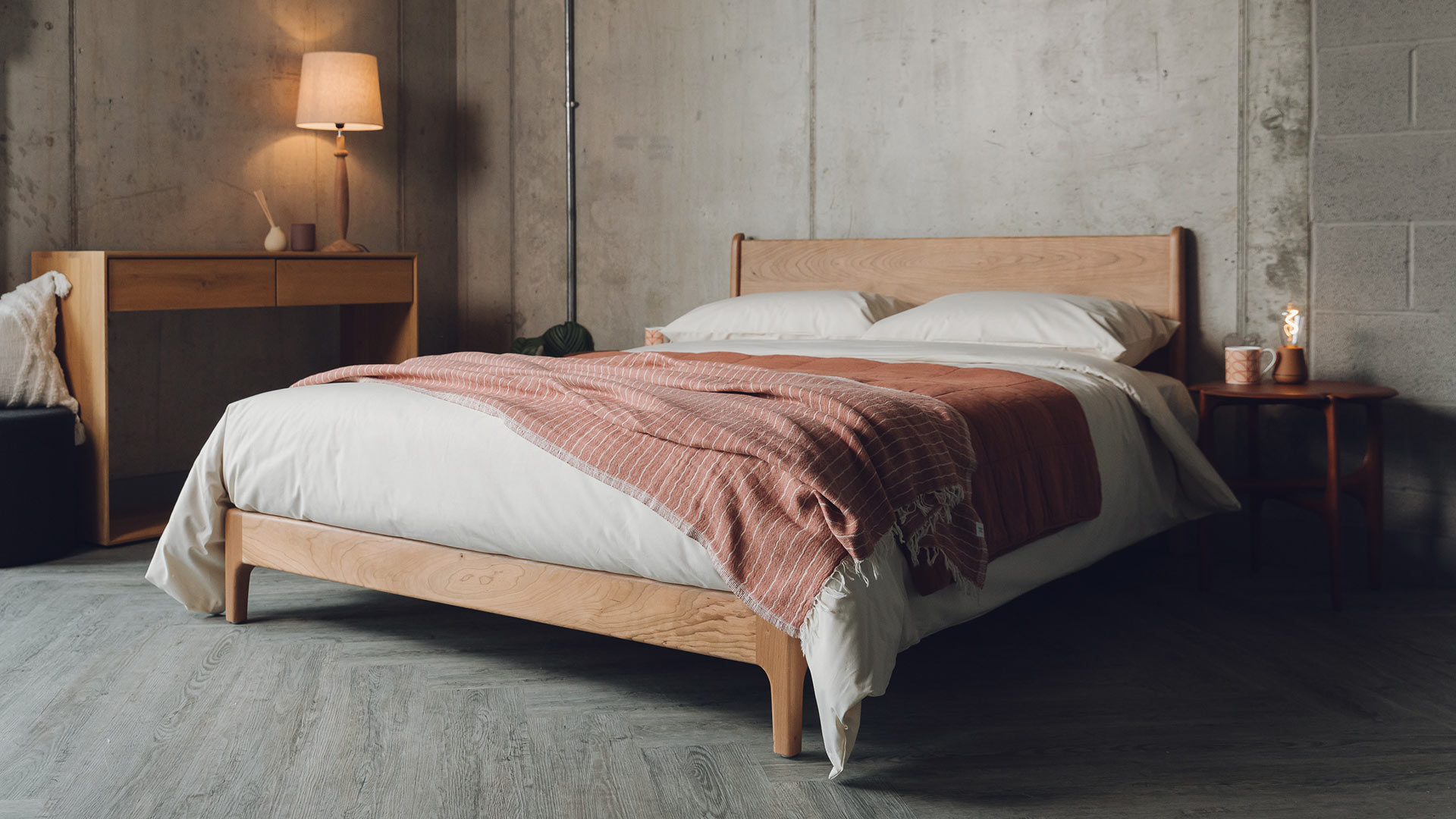
Sitting on the edge, the feet should sit flat on the floor with the knees at about a right angle. Too high and they slide down to stand. Too low and they have to heave upwards from a deep position with weak legs. A mattress that has softened in the middle over years makes both problems worse, and a divan with a deep memory foam topper can be considerably higher than it looks.
An occupational therapist will measure this properly, and it is one of the cheapest changes available. Cheshire East Council arranges occupational therapy through adult social care on 0300 123 5010. For Buxton and Whaley Bridge it is Derbyshire, and for Leek, Biddulph and Kidsgrove it is Staffordshire.
Should we fit bed rails?
Bed rails are regulated as medical devices by the MHRA, which continues to receive reports of deaths and serious injuries from entrapment. In the most serious cases people have died from asphyxiation after their head or neck became trapped between the rails, between the rails and the mattress, or between the rails and the bed frame. Most reported incidents occurred in community care settings (MHRA, Bed rails: management and safe use). NHS England classifies chest or neck entrapment in a bed rail as a Never Event.
There is a second problem specific to confusion. The MHRA notes cases where disoriented occupants tried to climb over the rails and then fell from a greater height than they otherwise would have. For someone who is determined to get out of bed, a rail can convert a low fall into a high one.
Bed grab handles are not an alternative, either. The MHRA is explicit that they are not designed to prevent falls from bed and should not be used as a substitute for rails, and it has received reports of deaths from entrapment in grab handles.
Option | Worth considering when | Watch out for |
|---|---|---|
Lower the bed | Almost always the first thing to try | Too low makes standing up harder. Get it measured |
Crash mat beside the bed | Someone rolls or slides out | Becomes a trip hazard for anyone walking to the toilet |
Sensor light on the route | Falls happen on the way to the bathroom | Nothing much. Cheap and effective |
Profiling bed | Getting in and out is the difficulty | Usually needs an occupational therapy assessment |
Bed rails | After a documented risk assessment, and rarely for someone confused or restless | Entrapment, and falls from greater height if climbed over |
If rails are used after proper assessment, the MHRA requires the right combination of bed, mattress and rail, correct fitting, and regular reassessment as circumstances change. That is a job for an occupational therapist or equipment service, not a purchase off the internet.
What about the person who is trying to leave the house at night?
Restricting someone in bed to prevent them leaving is a restriction of liberty, and it carries legal and ethical weight as well as physical risk. The better conversation is about why the person is getting up, what they are trying to do, and whether overnight support or a live-in arrangement addresses the actual problem. It is a harder conversation and it produces a safer answer.
Frequently asked questions
Is falling out of bed serious if they were not hurt?
It is worth investigating even without injury. NICE treats any fall in the past year as the trigger for a falls assessment, and a night fall in particular points at medication timing, blood pressure or disorientation, all of which are treatable.
Are bed rails ever the right answer?
Yes, for some people, after a documented risk assessment that weighs the entrapment risk against the falls risk. They are least suitable for people who are confused, restless, or physically able to climb over them.
Would a hospital bed help?
A profiling bed can make getting in and out considerably easier and can be lowered further than a standard divan. It is a significant change to a bedroom, so get an occupational therapy assessment rather than buying one on spec.
They only fall out when they have had a drink. Does that matter?
Yes, and it is worth mentioning to a GP. Alcohol appears on NHS falls prevention advice, and it interacts with sedating medicines in a way that matters much more at 80 than at 40.
Does overnight care stop this?
It changes what happens rather than preventing every fall. Someone there overnight means help getting to the bathroom safely, and it means a fall is found in minutes rather than at breakfast, which is the difference that matters most.
About Visiting Angels Cheshire East
Visiting Angels Cheshire East provides care at home across Macclesfield, Wilmslow, Knutsford, Congleton and the surrounding villages, along with Buxton, Whaley Bridge and the Staffordshire Moorlands towns.
- You choose your caregiver. You meet them before care starts, and if it is not right you say so and we send someone else.
- No visit is ever shorter than an hour. There is no such thing as a fifteen minute call here.
- Overnight and live-in care available, up to full time, where the nights are the difficult part.
- You see the same faces. Our carer turnover is 12 per cent, against a sector figure of 23.7 per cent (Skills for Care, 2025).
- Carers trained in dementia, Parkinson’s, stroke recovery and complex care.
Jude’s mother Joyce is 100 and lives by herself:
“Joyce lives by herself and we needed a care provider that could give us the same carer most visits. Visiting Angels have been able to accommodate this, which is very helpful. They know her routine and have built up a rapport with my Mum. Understanding the details of her routine is an important part of her care and wellbeing. I trust them with keys, security and being with Mum to, cook, sit and talk and give tablets etc etc.. We communicate regularly and they are always there on the phone if issues occur.”
Jude Burton, Google review
Not sure what you need yet? Start with a free assessment
Our free home care assessment is a visit at a time that suits you, with no obligation afterwards.
In it we will:
- Work out what is actually difficult, and which times of day or night, which is usually what a visit should be built around.
- Talk through a realistic package, and what it would cost.
- Look at the money with you, and point you towards the funding, benefits and grants you may be entitled to, including the ones most families are never told about.
- Tell you honestly if you do not need us yet, or if someone else is a better fit.
If the nights are the part that has become difficult, call us on 01625 720157. You can also WhatsApp us or send an enquiry, and you can see what our services cover.
Authored by Dr Haroon Ahmad, Managing Director, Visiting Angels Cheshire East.
Published 6 September 2026. Last updated 6 September 2026.
This article is general information, not medical advice, and no substitute for a professional who knows the person. Bed rails and similar equipment should only be used following an individual risk assessment by a qualified professional. The author is a director of the company and is not acting in a clinical capacity, and Visiting Angels Cheshire East provides personal care at home rather than medical or nursing care. Speak to a GP, a pharmacist or NHS 111 about your own situation, and call 999 in an emergency. Information correct at the date of publication. To the fullest extent permitted by law, GB Care at Home Ltd accepts no liability for any loss or injury arising from reliance on it.