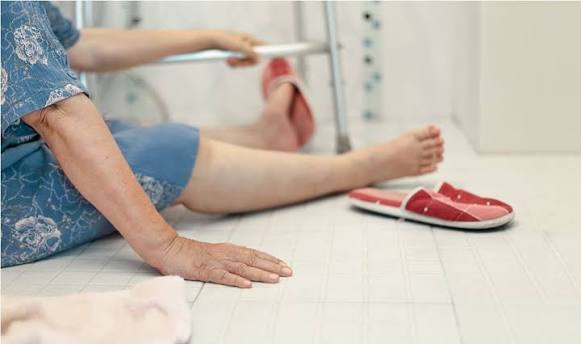

Who do I call when an elderly person falls?
Quick summary
999 if they are hurt, cannot get up, hit their head, or seem confused. 111 if they are shaken but uninjured and you want advice. Their GP within a few days if there was no injury at all, because a fall still needs looking into. If you cannot decide, ring 999 and let them triage it.
Do I ring 999 or 111?
The line is mostly about three things: the head, the hips, and whether they can get themselves up.
The NHS says to call 999 if someone has fallen and may have injured their head, back, neck or hip, or if they cannot get up. Everything else short of that is a 111 call (NHS, Falls).
You are not expected to diagnose anything. You are deciding which service to hand the decision to.
Call | When | What happens |
|---|---|---|
999 | Cannot get up. Possible head, neck, back or hip injury. Knocked out, or cannot stay awake. A seizure. New weakness, numbness or slurred speech. Problems with vision or balance. Clear fluid or blood from an ear. Bleeding that will not stop. They seem confused when they normally are not. | Ambulance dispatched, triaged by urgency. Assessment at the scene, and A and E if needed |
111 | Shaken, sore or unwell, but none of the above. Also ring 111 if they were sick, felt dizzy or faint before the fall, or take a medicine that thins the blood | Questions, then a clinician call back, an urgent appointment, or an ambulance if the answers warrant it |
GP | No injury and no symptoms, but they fell. Or they have fallen before | A falls assessment, a medication review, referral to the local falls service |
What counts as a head injury?
More than people think. A bump on a carpeted floor still counts if any of the warning signs follow.
The NHS lists these as 999 calls after a blow to the head: being knocked out and not waking up, difficulty staying awake, a fit or seizure, a fall from more than a metre or down five or more stairs, new problems with vision, walking, balance, speaking or understanding, weakness or numbness in part of the body, clear fluid or blood coming from the ears or nose, and a black eye with no direct blow to the eye. Changed behaviour counts too (NHS, Head injury and concussion).
Blood thinners change everything about this call. Warfarin, apixaban, rivaroxaban, edoxaban and similar medicines mean a bleed inside the skull can develop from a knock that would be nothing in anyone else. The NHS names them specifically as a reason to get advice after a head injury. Say the drug name in the first sentence of the call.
What will they ask me?
It helps to have the answers ready, because the questions come fast and you might be flustered.
- Are they conscious and breathing.
- Their age, and roughly what happened.
- Whether they hit their head, and whether they blacked out.
- Whether they can move everything, and whether any limb looks wrong.
- What medicines they take, particularly blood thinners.
- Their address, including which door to use and whether there is a key safe.
Crews lose a lot of time at locked front doors and at rural properties around Chelford, Wincle and Meerbrook where the postcode covers half a mile of lane.
What if I genuinely cannot tell?
Ring 999.
Call handlers triage. That is the entire design of the system. Ringing 111 first when someone has a suspected hip fracture costs time that matters.
Some ambulance services and councils also run a falls response or lifting service for people who are on the floor but not injured, sometimes reached through 999 and sometimes through a community team. Ask about it when you call, because it can be a faster and gentler outcome than an emergency department.
Should I move them while I wait?
No, unless they are in danger where they are.
Keep them warm, put something soft under the head, and encourage small changes of position roughly every half hour to protect the skin. Do not give food or drink if there is any chance of surgery, and say so if you already have.
Do not lift them. If they can get themselves up with a sturdy chair and your encouragement, that is different.
Which hospital will they go to?
Cheshire East crosses three counties and four hospital catchments.
Macclesfield, Bollington, Prestbury, Sutton, Wilmslow, Handforth, Alderley Edge and Knutsford almost always route to Macclesfield District General. Alsager and the south of the county go to Leighton Hospital in Crewe. Whaley Bridge and Chapel-en-le-Frith often route to Stepping Hill in Stockport. Kidsgrove and Biddulph generally go to Royal Stoke.
Cavendish Hospital in Buxton and Leek Moorlands Hospital provide community services rather than emergency care, so an ambulance will drive past them.
What if they refuse to let me call anyone?
An adult with capacity can decline an ambulance, and that includes an adult who is being unreasonable about it.
What usually works is naming the specific fear rather than arguing about the fall. Most refusals are about one thing, and it is usually a care home, losing the car, or being kept in overnight. Saying that the ambulance crew can assess at home and often leaves people where they are is both true and reassuring.
If they have hit their head, are on blood thinners, or seem confused, ring anyway and explain the refusal to the call handler. Confusion itself may mean they cannot make that decision at that moment.
Nobody was hurt. Do I still ring the GP?
Yes.
NICE guidance updated in April 2025 says everyone aged 65 and over should be asked whether they have fallen in the past year, and that anyone who has fallen should have their gait and balance assessed. A fuller falls assessment is recommended for anyone who was injured, blacked out, is living with frailty, or could not get up unaided (NICE NG249).
Ring the surgery, use the word “fall”, and ask for a falls assessment and a medication review.
Frequently asked questions
Is it an emergency if they got themselves up?
Not usually, but it depends on what came before. Getting up unaided rules out a lot, though not a head injury or a slow bleed. If they hit their head, take blood thinners, or felt faint before they went down, ring 111 even though they are on their feet.
Should I ring their GP or 111 out of hours?
111, and it covers evenings, nights and weekends. The GP is for the daytime follow up, not for the immediate question.
Can I ring 111 on their behalf?
Yes. You can call about someone else, and it is better if you are the one who saw what happened. Have their date of birth, their address and a list of their medicines to hand.
What if they live alone and I am an hour away?
Ring 999 rather than driving over first to see how bad it is. If a neighbour has a key or there is a key safe, tell the call handler the code. Then set off.
Does a personal alarm call the ambulance for them?
It calls a monitoring centre, which then decides whether to contact a named responder or the emergency services. It is a route to help rather than a direct 999 line, and it only works if the pendant is worn and pressed.
About Visiting Angels Cheshire East
Visiting Angels Cheshire East provides care at home across Macclesfield, Wilmslow, Knutsford, Congleton, Alsager and the surrounding villages, along with Buxton, Whaley Bridge and the Staffordshire Moorlands towns.
- You choose your caregiver. You meet them before care starts, and if it is not right you say so and we send someone else.
- No visit is ever shorter than an hour. There is no such thing as a fifteen minute call here because it simply isn’t long enough.
- You see the same faces. Our carer turnover is 12 per cent, against a sector figure of 23.7 per cent (Skills for Care, 2025).
- Carers trained in dementia, Parkinson’s, stroke recovery and complex care.
- Live-in care available, up to full time, where someone should not be on their own overnight.
Jude’s mother Joyce is 100 and lives by herself:
“Joyce lives by herself and we needed a care provider that could give us the same carer most visits. Visiting Angels have been able to accommodate this, which is very helpful. They know her routine and have built up a rapport with my Mum. Understanding the details of her routine is an important part of her care and wellbeing. I trust them with keys, security and being with Mum to, cook, sit and talk and give tablets etc etc.. We communicate regularly and they are always there on the phone if issues occur. They are very friendly, understanding and flexible if changes occur. I would recommend their services.”
Jude Burton, Google review
Not sure what you need yet? Start with a free assessment
Our free home care assessment is a visit at a time that suits you, with no obligation afterwards. In it we will:
- Work out what is actually difficult, and which times of day, which is what a visit should be built around.
- Talk through a realistic package, and what it would cost.
- Look at the money with you, and point you towards the funding, benefits and grants you may be entitled to, including the ones most families are never told about.
- Tell you honestly if you do not need us yet, or if someone else is a better fit.
If someone you love has had a fall and you are working out what happens next, call us on 01625 720157 and we will talk it through. You can also WhatsApp us or send an enquiry, or read more about the areas we cover.
Authored by Dr Haroon Ahmad, Managing Director, Visiting Angels Cheshire East.
Published 6 September 2026. Last updated 6 September 2026.
This article is general information, not medical advice, and no substitute for a professional who knows the person. The author is a director of the company and is not acting in a clinical capacity, and Visiting Angels Cheshire East provides personal care at home rather than medical or nursing care. Speak to a GP, a pharmacist or NHS 111 about your own situation, and call 999 in an emergency. Information correct at the date of publication. To the fullest extent permitted by law, GB Care at Home Ltd accepts no liability for any loss or injury arising from reliance on it.