
Falling downstairs: what to check afterwards
Quick summary
Even if they get up and seem fine, check three things: the head, the wrists, and whether they can put weight through both legs. A fall down stairs involves more height and more force than a trip on the flat, so call 999 for a head injury, a suspected hip, or anyone on blood thinners.
Why stairs are treated differently
Because the fall is longer, the body turns over on the way down, and the landing is usually onto a hard floor at the bottom.
The NHS uses a fall down five or more stairs as one of its triggers for calling 999 after a head injury, alongside a fall of more than a metre (NHS, Head injury and concussion). That threshold exists because the forces involved are in a different class from a stumble on the landing.
The national picture backs it up. RoSPA reports that falls on stairs and steps kill more than 1,000 people a year in England and Wales, with around 43,000 more admitted to hospital (RoSPA, Safer Stairs). Its 2023 analysis found falls were the leading cause of accidental death in the UK, and that falls from stairs and steps were the most commonly identified cause of fall-related deaths (Centre for Ageing Better, on RoSPA data).
Older people are not necessarily the group who fall on stairs most often. They are the group who are least to recover from it.
What do I check first?
Check | What you are looking for | What it means |
|---|---|---|
The head | Any impact at all. Drowsiness, confusion, repeated vomiting, a worsening headache, fluid or blood from an ear, unequal pupils, changed behaviour | 999. Head injuries after a stair fall are the most common serious outcome |
Weight bearing | Can they stand and put weight through both legs. Pain in the hip, groin or thigh. A leg that looks shorter or turned outwards | 999. Do not walk them to a chair |
Wrists and forearms | Swelling, obvious deformity, pain on movement. Both wrists, not just the sore one | Urgent assessment. Wrist fractures are the classic outstretched-hand injury |
Neck and back | Midline pain, tingling, numbness, weakness in the arms or legs | 999, and do not move them |
Ribs and chest | Pain on breathing in, shortness of breath, pain over the ribs | 111 at minimum. Rib fractures in older people carry a real risk of chest infection |
Why the wrists specifically?
Because the hands go out automatically, and on a staircase they often catch the treads on the way down rather than the floor at the bottom.
Wrist fractures get underestimated because a cast looks minor compared to the immobility of a fractured hip. In practice, one working hand means no jars, no tin openers, no buttons, no getting out of a bath and no carrying a full kettle. Most of the healing takes six to twelve weeks, with sensitivity lasting several months afterwards (NHS inform, Wrist fracture).
What about blood thinners?
If they take a blood thinner and their head made contact with anything, they need assessing the same day.
Warfarin, apixaban, rivaroxaban and similar medicines mean a bleed inside the skull that would seal itself in anyone else can keep going, and the symptoms often appear hours later. The NHS names anticoagulants specifically as a reason to seek advice after a head injury. Say the drug name when you ring.
They got up and say they are fine
Adrenaline after a stair fall is considerable, and people walk about on injuries they should not be walking on.
Watch the next 48 hours. Pain and bruising usually peak at 24 to 48 hours rather than on the day, and that on its own is normal. What is not normal is pain that keeps building, a headache that worsens, repeated vomiting, drowsiness at a normally alert time, new confusion, or hip or thigh pain that gets worse instead of settling.
Somebody should stay with them for the first 24 hours after any head impact. Symptoms can persist for up to two weeks, and anything beyond that should go to a GP.
What made them fall on the stairs?
Worth asking once the immediate danger has passed, because the answer changes what happens next.
Did they trip on something, or did their legs give way? Did they feel dizzy at the top? Did they miss the last step? These are three completely different problems. A trip is an environmental issue. Legs giving way is a strength issue. Dizziness at the top of a flight points at blood pressure or medication, and missing the last step points at eyesight.
NICE recommends a home hazard assessment using a validated tool, ideally by an occupational therapist, as part of falls management, alongside investigation of the medical causes (NICE NG249, April 2025). Both halves matter. Fixing the carpet will not help if the cause was a blood pressure drop.
Is it time to stop using the stairs?
This is the conversation a stair fall usually starts.
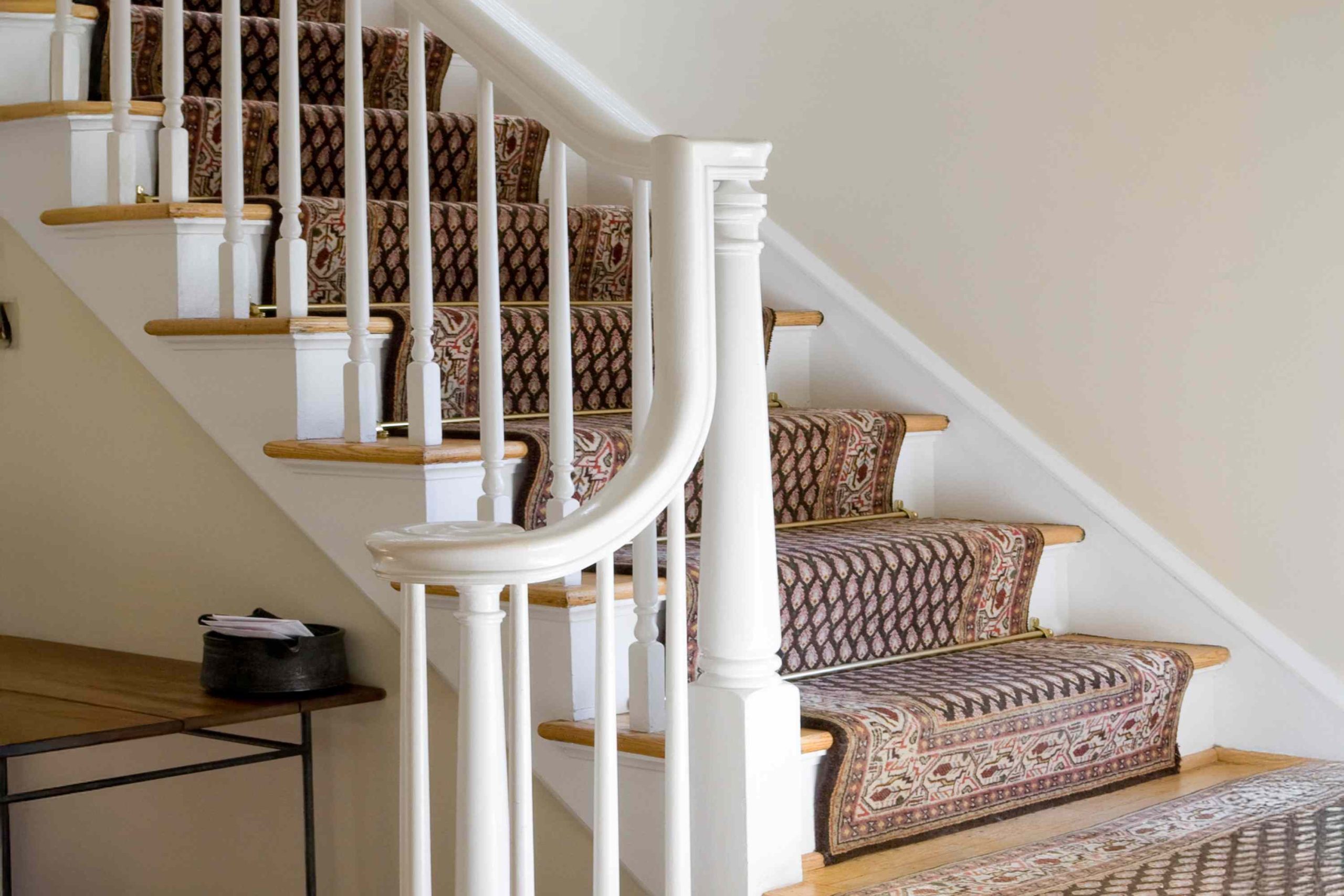
The options are not simply “stay as you are” or “move house”. In between sit a second handrail, better lighting with switches at both ends, contrast on the step edges, a stairlift, or moving the bedroom downstairs. RoSPA’s position is that building stairs to British Standard 5395-1 reduces the chance of falling by around 60 per cent, which tells you how much of this is design rather than behaviour.
A second handrail is the cheapest thing on that list and the most often skipped. Most staircases have one, and it is on the wrong side for someone with weakness down one side after a stroke.
Cheshire East Council can arrange an occupational therapy assessment and advise on adaptations and Disabled Facilities Grants through adult social care on 0300 123 5010. For Buxton and Whaley Bridge that is Derbyshire, and for Leek, Biddulph and Kidsgrove it is Staffordshire.
Frequently asked questions
They fell down two steps, not a whole flight. Does that count?
The NHS threshold for an automatic 999 call is five or more stairs or a fall of more than a metre, but a shorter fall still counts if there are warning signs, and it still counts if they are on blood thinners. The number of steps is one factor, not the whole test.
Should they sleep after a fall down stairs?
Sleep is fine, and the old advice about keeping people awake all night is out of date. What matters is that they are rousable and make sense when woken, and that somebody is nearby for the first 24 hours.
Is a stairlift the answer?
Sometimes, and not always. A stairlift solves the stairs and does nothing for the walk to the bathroom at three in the morning, which is where a lot of falls actually happen. Get the occupational therapy assessment before buying anything, because the assessment often identifies a different priority.
Can I claim for stair adaptations?
A Disabled Facilities Grant is available through the local council for adaptations where someone is assessed as needing them. It is means-tested for most adults and the process starts with an occupational therapy assessment rather than with a quote from a contractor.
Should the bedroom move downstairs?
It is worth considering, and it is a bigger change than it sounds if the only toilet is upstairs. Work out the whole route someone takes at night, not just the staircase, before rearranging the house.
About Visiting Angels Cheshire East
Visiting Angels Cheshire East provides care at home across Macclesfield, Wilmslow, Knutsford, Congleton, Alsager and the surrounding villages of East Cheshire, along with Buxton, Whaley Bridge and the Staffordshire Moorlands towns.
You choose your caregiver. You meet them before care starts, and if it is not right you say so and we send someone else.
No visit is ever shorter than an hour. There is no such thing as a fifteen minute call here.
You see the same faces. Our carer turnover is 12 per cent, against a sector figure of 23.7 per cent (Skills for Care, 2025).
Carers trained in dementia, Parkinson’s, stroke recovery and complex care.
Live-in care available, up to full time, where someone should not be on their own overnight.
Alan’s wife is supported at home, and this is what he wrote:
“Excellent in every respect. Staff are caring, friendly and helpful. [Our carers] do everything they can to make my wife’s life easier. Management and staff are flexible in their approach and do the unpleasant jobs with a smile and willingness which is commendable. They are always willing to ‘go the extra mile.'”
Alan Hallett, Google review
Not sure what you need yet? Start with a free assessment
Our free home care assessment is a visit at a time that suits you, with no obligation afterwards. In it we will:
Work out what is actually difficult, and which times of day, which is usually what a visit should be built around.
Talk through a realistic package, and what it would cost.
Look at the money with you, and point you towards the funding, benefits and grants you may be entitled to, including the ones most families are never told about.
Tell you honestly if you do not need us yet, or if someone else is a better fit.
If a fall on the stairs has started a bigger conversation about whether the house still works, call us on 01625 720157. You can also WhatsApp us or send an enquiry, and you can see what our services cover.
Authored by Dr Niall Jawad, Director, Visiting Angels Cheshire East.
Published 6 September 2026. Last updated 6 September 2026.
This article is general information, not medical advice, and no substitute for a professional who knows the person. The author is a director of the company and is not acting in a clinical capacity, and Visiting Angels Cheshire East provides personal care at home rather than medical or nursing care. Speak to a GP, a pharmacist or NHS 111 about your own situation, and call 999 in an emergency. Information correct at the date of publication. To the fullest extent permitted by law, GB Care at Home Ltd accepts no liability for any loss or injury arising from reliance on it.